
Manuscripts
Search Filter
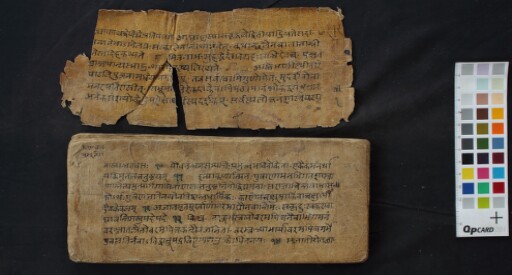
Hitopadeśa
EAP1023/17/15 Language : Sanskrit Scripts : Devanagari
Hitopadesha, lit. Beneficial Advice, is a Sanskrit text consisting of fables with both animal and human characters. It incorporates maxims, wisdom and advice on political affairs in simple, elegant language. It has been widely translated. The oldest manuscript found in Nepal is dated 14th century. Its content and style has been traced to the ancient Sanskrit treatises called 'Panchatantra'.
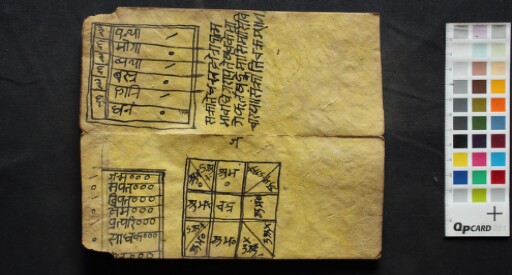
Vargacakra
EAP1023/17/12 Language : Sanskrit Scripts : Devanagari
This is an Indian astrological text. refers to the division of a zodiacal sign (rāśi) into parts. Each such fractional part of a sign called aṃśa has a source of influence associated with it. Those sources of influence come to be associated with collections of regions around the zodiac. There are sixteen vargas or divisional charts used in astrology They form the basis of a unique system of finding the auspiciousness or inauspiciousness of planets.
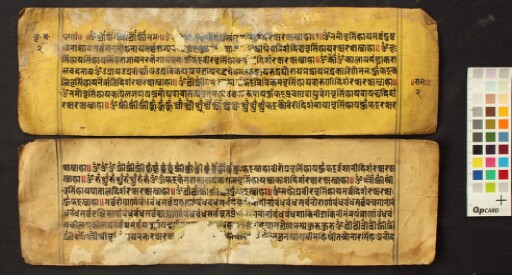
Nṛsiṃhapañjara
EAP1023/17/9 Language : Sanskrit Scripts : Devanagari
This is a Hindu Stora dedicated to the praise of Lakshmi Nrishimha.
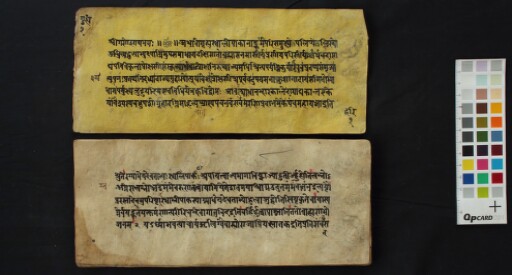
Gṛhyasūtra
EAP1023/17/10 Language : Sanskrit Scripts : Devanagari
Grihya Sutra is a manual detailing the domestic religious ceremonies performed by both Hindu male and female householders over the fire. The Sutras, together with the Shrauta Sutras, which deal with the grand Vedic sacrifices, and the Dharma Sutras, which deal with rules of conduct, make up the Kalpa Sutras - collections of texts that emerged within the different Vedic schools. The Grihya Sutras describe the ceremonies that mark each stage of an individual’s life, from the moment of conception to the final death rites; the five daily sacrifices, seasonal ceremonies; and those observed on special occasions, such as house building or cattle breeding.
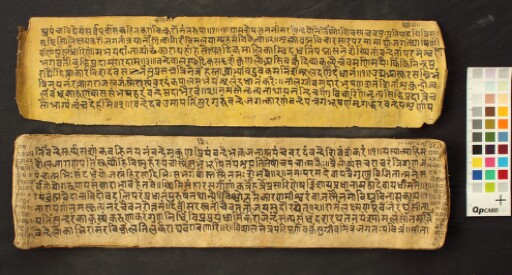
Vālmīki Rāmāyaṇa Uttarakāṇḍa
EAP1023/17/8 Language : Sanskrit Scripts : Devanagari
Ramayana [Rāmāyaṇa] is a great epic of the Hindus that elaborates the deeds of Rama an incarnation of Vishnu. He secured victory over evil. This manuscript is an abridged version of latter part of thestory detailing the story of Rama banishing Sita from Ayodhya and birth of their sons. It also elaborates the story of Luv Kush training by Rishi Valmiki.
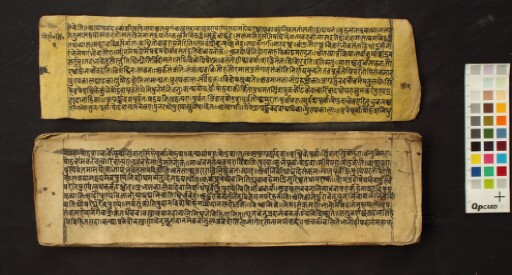
Nirṇayasindhu
EAP1023/17/7 Language : Sanskrit Scripts : Devanagari
This is the book of decisions regarding to four Varnas, four Ashramas, Hindu religious and cultural behaviours, and all other activities.
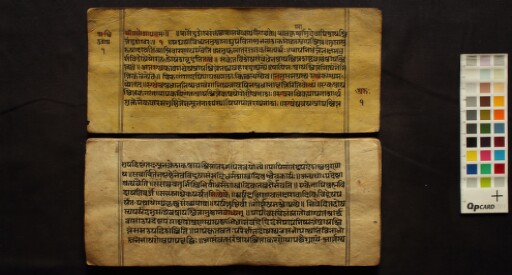
Prāyaścittenduśekhara
EAP1023/17/6 Language : Sanskrit Scripts : Devanagari
It is a Dharmashastra text. Its subject is performance of prayaschitta or ritual atonement.
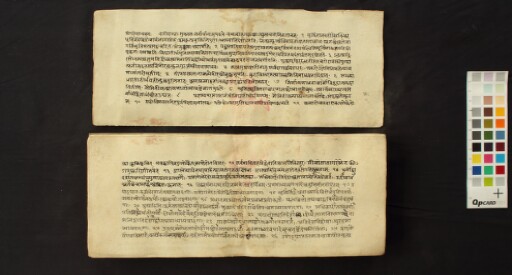
Jaiminīya-Nyāyamālāvistara
EAP1023/17/5 Language : Sanskrit Scripts : Devanagari
It is a Mimamsha Shastra divided into twelve chapters. It is an important work on philosophy by Madhavacharya.
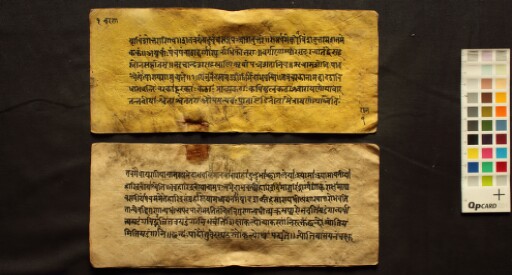
Caraṇavyūha
EAP1023/17/2 Language : Sanskrit Scripts : Devanagari
Charana Vyuha or the ‘Exposition of the Schools’ of various Vedas , is a late work giving less complete enumeration of the Vedic schools than certain sections of Vishnu and Vayu Purana [Viṣṇupurāṇa and Vāyupurāṇa].
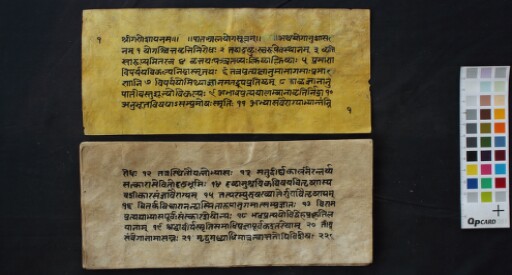
Yogasūtra
EAP1023/17/4 Language : Sanskrit Scripts : Devanagari
This manuscript is the fourth section or chapter of Patanjali Yoga Sutra. This chapter is Named as Kaivalyapada. It is about the finalliberation. It forms the foundation of classical yoga philosophy.
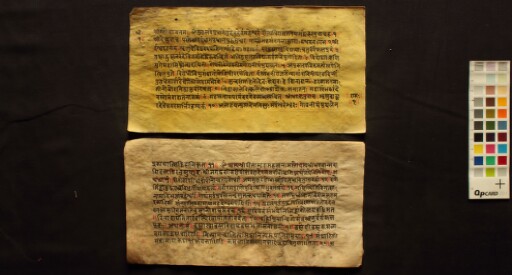
Pītāmbarasahasranāmastotra
EAP1023/17/1 Language : Sanskrit Scripts : Devanagari
Bagalamukhi is known by the popular epithet Pitambara-devi or Pitambari. She wears yellow clothes. The iconography and worship rituals repeatedly refer to the yellow colour. Pitamvara Sahasranama Stotra is the eulogy of Baglamukhi.This text is Bagalamukhi Stotra that recites.
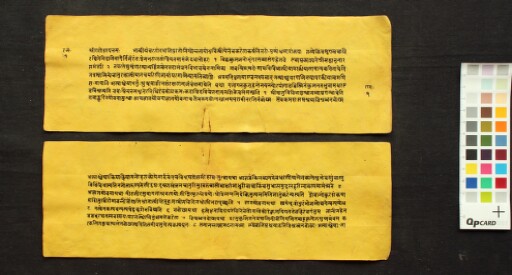
Rasamaňjarī
EAP1023/28/8 Language : Sanskrit Scripts : Devanagari
Sanskrit classic Rasamanjari, a long poem with epical stretch but not an epic, is a work by the known Sanskrit poet Bhanudatta. It is a 15th century text on Indian aesthetics. This is an erotic text. Rasamanjari literally refers to the cluster of blossoms full of Rasas. It is one of the most inspiring texts of ancient India that prompted various schools of Indian painting.