Kātantravyākaraṇa
matsunami_84 · General Library, The University of Tokyo
Introduction
About this Manuscript
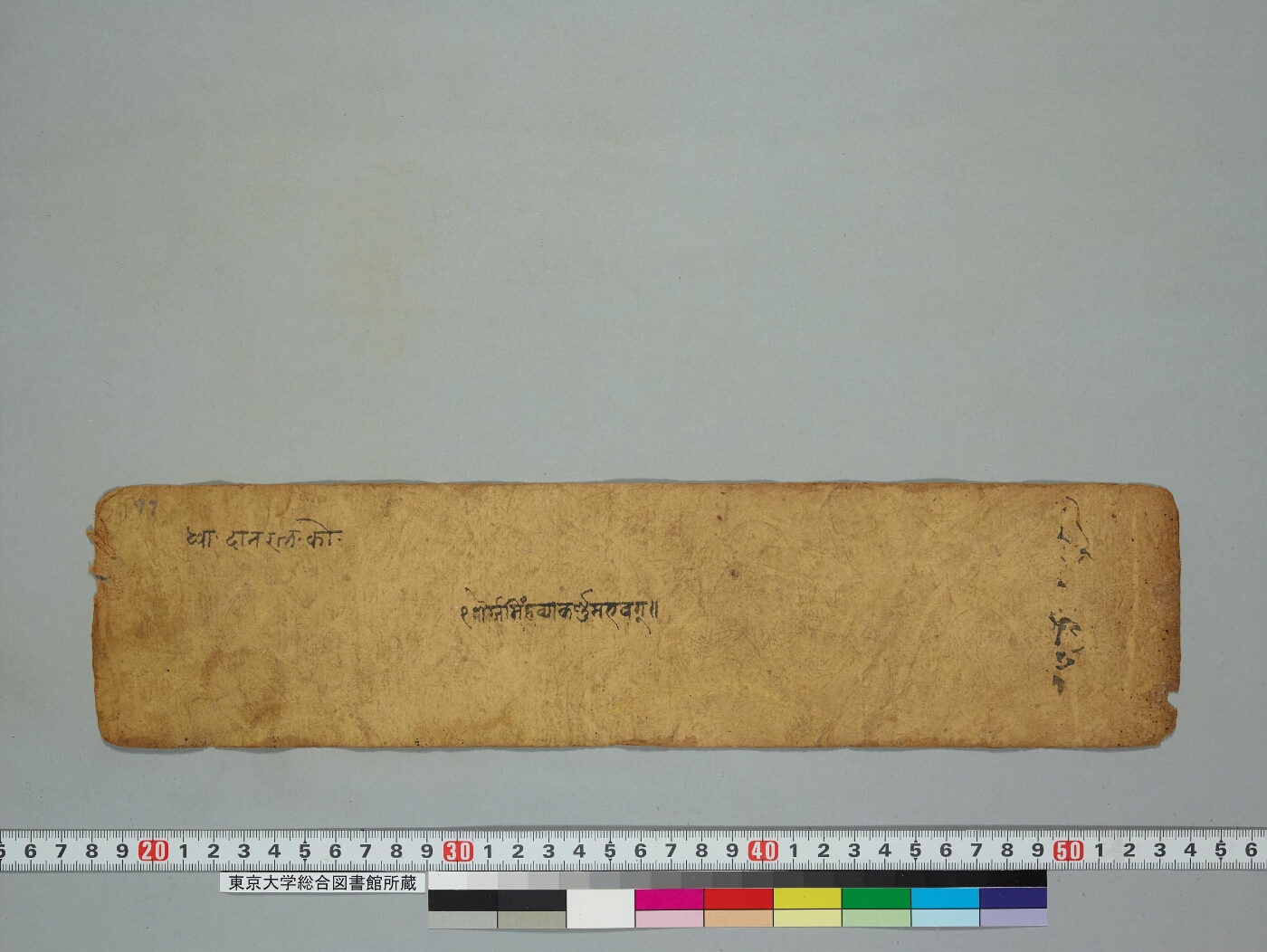
A Kātantravyākaraṇa text by Śarvavarmā, with a commentary named Daurgasiṃhavṛtti by the 8th-century Buddhist grammarian Durgāsiṃha, is considered a key work in the Kātantra tradition. The Kātantra school emerged as a successor to the school of Pāṇini. Śarvavarmā (also known as Śarvavarman), an adversary of Guṇāḍhya, pledged to teach King Śātavāhana the Sanskrit language within six months. He sought the blessing of Subrahmaṇya, who revealed to him a simplified grammar system known as Kātantra, Kālpa, or Kaumdra. This text is dated to the 1st century CE or BCE. The Kātantravyākaraṇa, being more concise than the Aṣṭādhyāyī, consists of four books with 1,400 sūtras, made clearer by the omission of elliptical statements (pratyāhāras) and arranged similarly to the later Kaumudī (Varadachari, 1952, pp. 195-196). The first pāda of the sandhi chapter is incomplete (the text ends abruptly on folio 2b). After 2b, the text suddenly begins with the nāmni catuṣṭaya chapter, with the folio numbers restarting from 1. The manuscript contains five pādas (up to the samāsa pāda) from the nāmni catuṣṭaya chapter.
Digital Facsimile Viewer
 Loading Universal Viewer
Catalogue Metadata
| Title | Kātantravyākaraṇa |
| Alternative Titles | Kalāpavyākaraṇa, Kālāpa, Kaumāravyākaraṇa |
| Repository | General Library, The University of Tokyo |
| Reference Number | matsunami_84 |
| Collection | Takakusu Junjiro Collection |
| Language | Sanskrit |
| Script | Nepālākṣara |
| Subject Classification | Vyākaraṇa |
| Date | Date not listed |
| Place of Origin | Japan |
| IIIF Manifest | Public IIIF manifest available |


