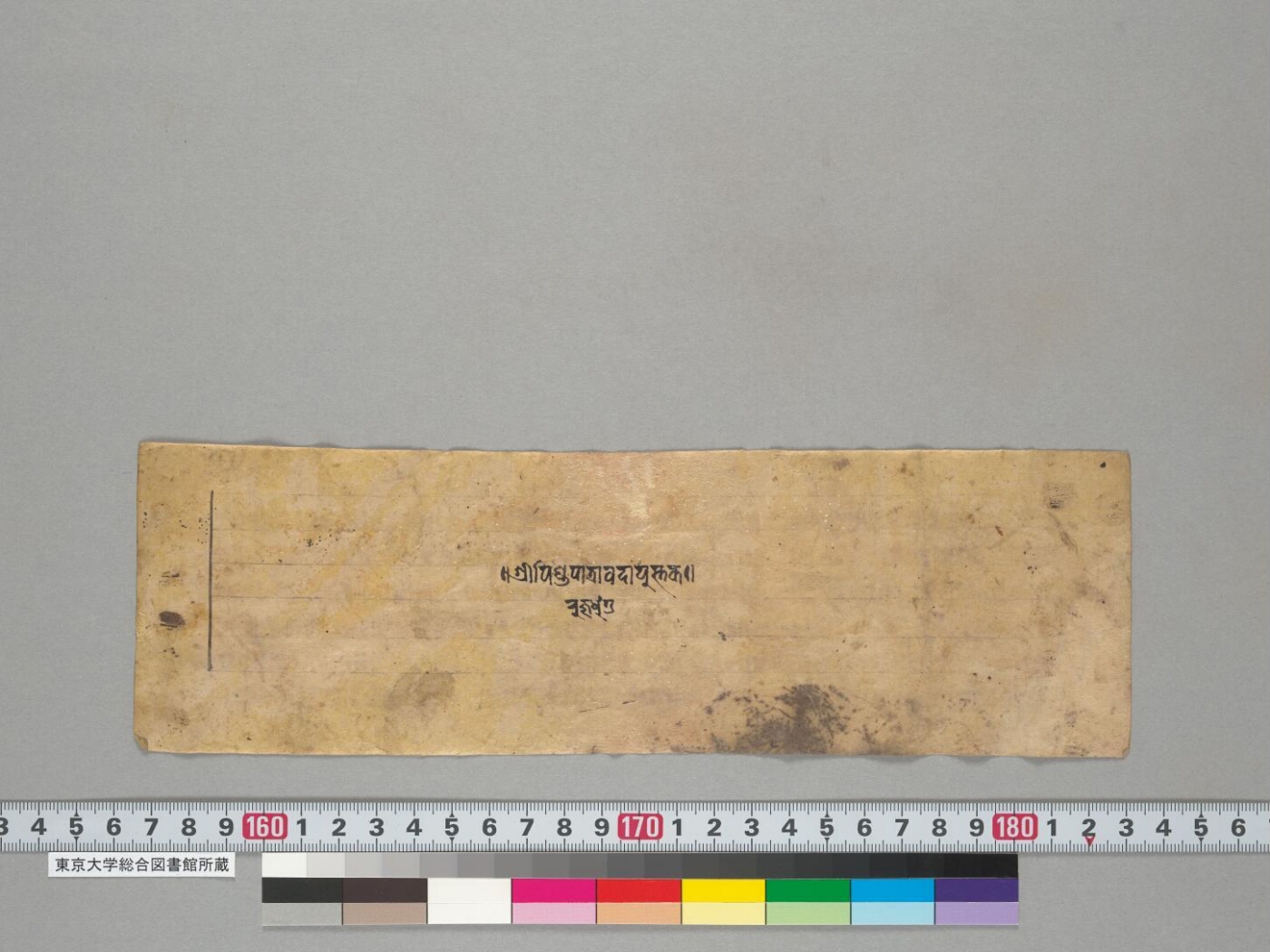
Piṇḍapātrāvadāna
matsunami_241 · General Library, The University of Tokyo
Introduction
About this Manuscript
An avadāna text praises the giving of alms-bowls to Buddhist mendicants. The story tells of Sarvānanda, the king of the great city of Dīpavatī, who once visited the renowned Vihāra of Prasannaśīla. During this visit, he brought the Buddha Dīpaṅkara to his city and presented him with an alms-bowl filled with rice. In response, the Buddha expounded on the merits and spiritual significance of giving alms (Mitra, 1882, p. 195). It shares thematic and narrative elements with the Kapiśāvadāna, another avadāna focusing on the significance of generosity in the Buddhist tradition. The mss is said to be written at the Śrī Ghaḥ Caitya, also known as the Kathesimbhu stupa. It's a Buddhist pilgrimage site and a miniature replica of the Swayambhunath Temple. Located in the heart of Kathmandu city, between Thamel and Kathmandu Durbar Square. Other names of the caitya: Śrī Shantighata Vajradhatu Caitya, Kashi Caitya, Kashyapa Caitya, Kathesimbhu stupa, and Sigha Chaitya.
Digital Facsimile Viewer
 Loading Universal Viewer
Catalogue Metadata
| Title | Piṇḍapātrāvadāna |
| Repository | General Library, The University of Tokyo |
| Reference Number | matsunami_241 |
| Collection | Kawaguchi Ekai Collection |
| Language | Sanskrit |
| Script | Nepālākṣara |
| Subject Classification | Avadāna |
| Date | Date not listed |
| Place of Origin | Japan |
| IIIF Manifest | Public IIIF manifest available |


