Kāmakalā prayoga
eap_79002028 · Supra Vajracarya collection
Introduction
About this Manuscript
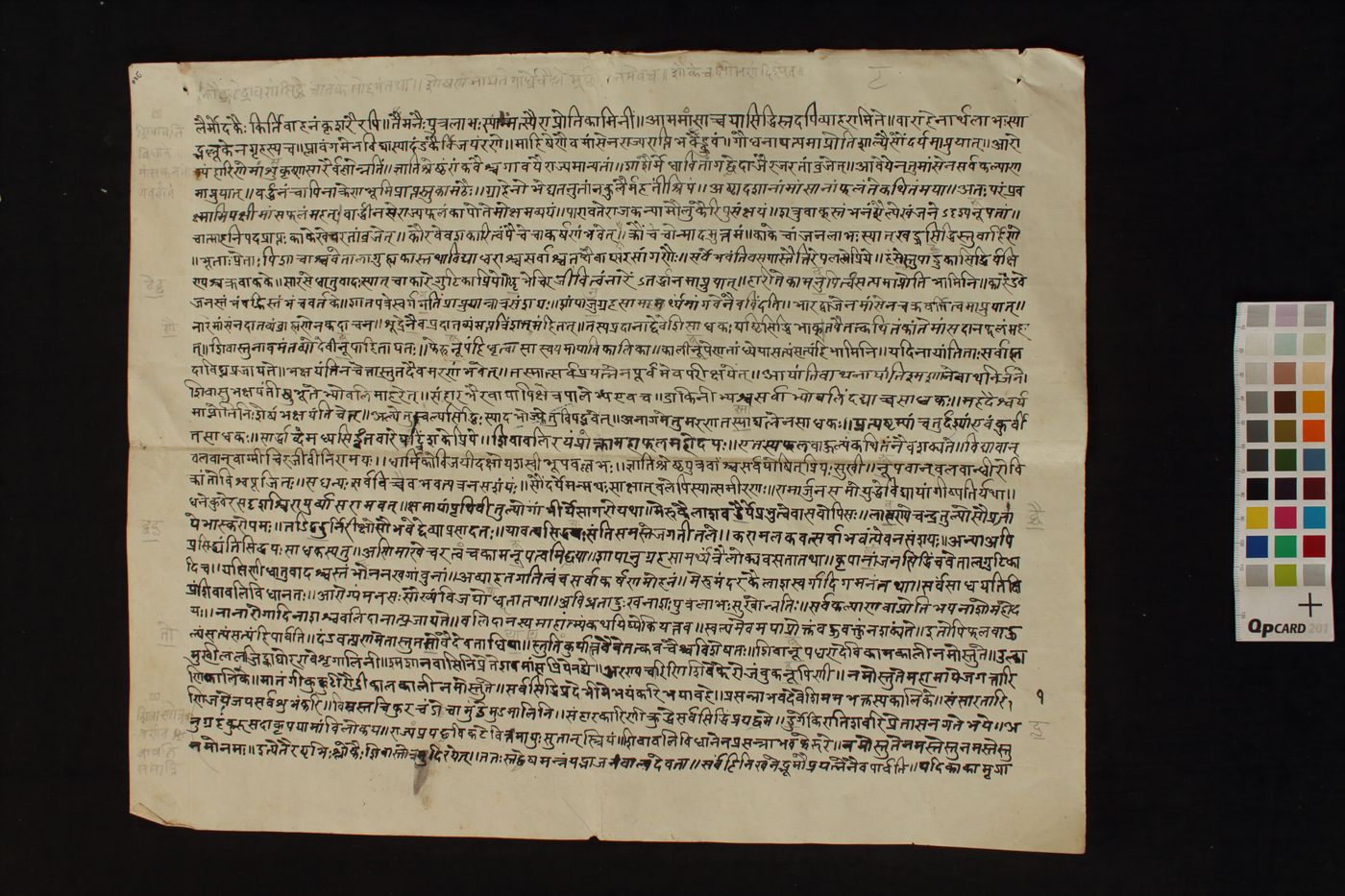
This is a hindu ritual text on Kāmakalā prayoga, the text is a part of the Kakārādikālīsahasranāma and also under Mahākālasaṃhitā. Kāma means intent to create and kalā refers to a part of the main object, in this case, Śiva. The conjugation of Kāma and kalā leads to the manifestation of Kāmeśvara and Kāmeśvarī forms. Śiva and Śaktī unite only in their kāma forms these two are their highest forms that cause Creation she is also called Mahā-tripura-sundarī. The author of the text is Ādinātha or Ādinātha Pārvatīpura, a tantric writer of Nātha school, sometimes found as Ādinātha Mahākāla. The text describes various adjective of the deity including; śmaśānacāriṇī, arṇyacāriṇi, muṇdamālādhāriṇī, pretavāsinī the following pages are describes the prayogavidhi of the puja. The manuscrpt is good but the stotras are written in prose form and there is so many correction, uppar and side notes by pencil. see NCC vol. 38, pg. 161b
Digital Facsimile Viewer
 Loading Mirador Viewer
Catalogue Metadata
| Title | Kāmakalā prayoga |
| Repository | Supra Vajracarya collection |
| Reference Number | eap_79002028 |
| Collection | Supra Vajracarya collection |
| Language | Sanskrit |
| Script | Devanāgarī |
| Subject Classification | Hindu rituals |
| Date | Date not listed |
| Place of Origin | Nepal |
| IIIF Manifest | Public IIIF manifest available |


