Description
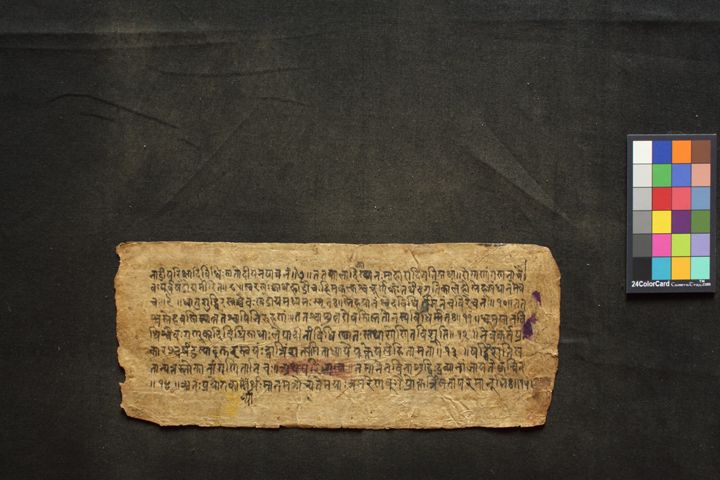
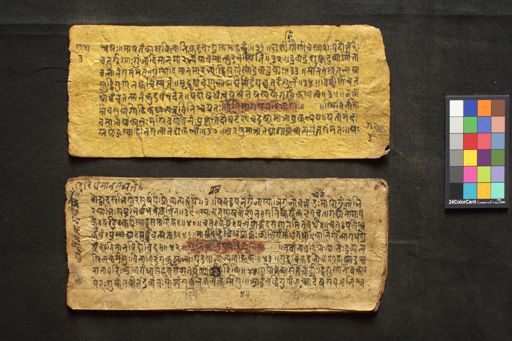
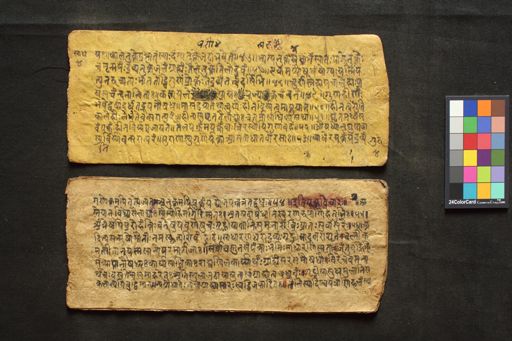
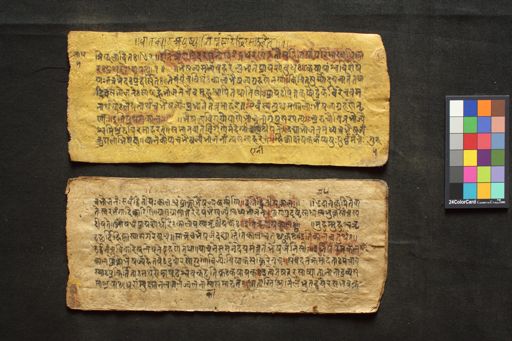
This manuscript contains portions of the Śārṅgadharasāra-saṃgraha (Śārṅgadhara-saṃhitā), an important compendium of Ayurveda composed by Ācārya Śārṅgadhara, the son of Dāmodara (Dāmodarasuta Śārṅgadhara), who flourished around the thirteenth century CE.
From the extant text it is evident that the manuscript preserves the first three chapters. The first chapter (Paribhāṣādhikāra) deals with fundamental principles and technical definitions employed in Ayurvedic theory. The second chapter (Bhaiṣajyākhyāna) discusses the proper timing of drug administration, together with the concepts of rasa, guṇa, vīrya, vipāka, and prabhāva of medicinal substances. The third chapter contains material relating to prognosis and diagnosis, including nāḍī-parīkṣā (pulse examination), svapna-lakṣaṇa (dream omens), dūta-lakṣaṇa (characteristics of the messenger), śakuna (omens), rogī-lakṣaṇa (signs of the patient), and vaidya-lakṣaṇa (qualities of the physician). Thus, the work presents a concise but practical exposition of Ayurvedic pharmacology and diagnostic science.
From the extant text it is evident that the manuscript preserves the first three chapters. The first chapter (Paribhāṣādhikāra) deals with fundamental principles and technical definitions employed in Ayurvedic theory. The second chapter (Bhaiṣajyākhyāna) discusses the proper timing of drug administration, together with the concepts of rasa, guṇa, vīrya, vipāka, and prabhāva of medicinal substances. The third chapter contains material relating to prognosis and diagnosis, including nāḍī-parīkṣā (pulse examination), svapna-lakṣaṇa (dream omens), dūta-lakṣaṇa (characteristics of the messenger), śakuna (omens), rogī-lakṣaṇa (signs of the patient), and vaidya-lakṣaṇa (qualities of the physician). Thus, the work presents a concise but practical exposition of Ayurvedic pharmacology and diagnostic science.
Manuscript Images
Public image preview

Additional Metadata