Description
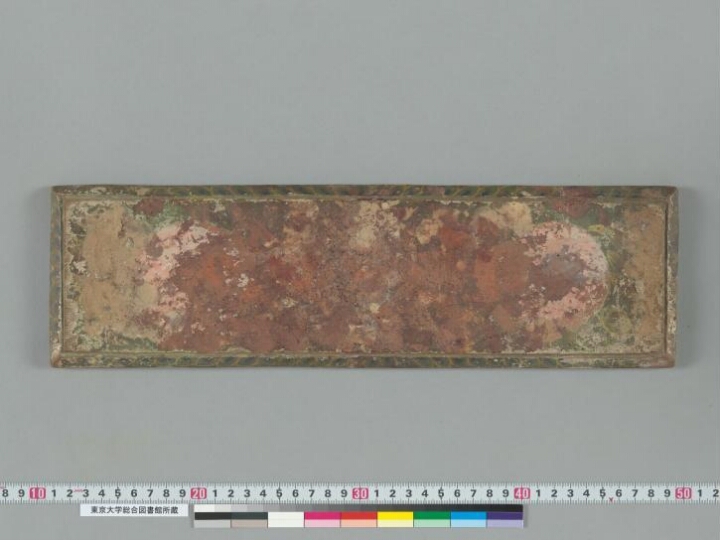
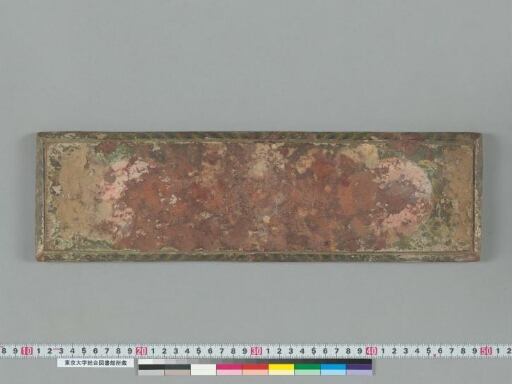
The Samādhirājasūtra (“Sūtra of the King of Samādhis”) is an early Indian Mahāyāna scripture that explores key themes such as emptiness (śūnyatā), bodhisattva conduct, mendicancy, accounts of past lives, and future prophecies. Its teachings on emptiness were widely cited by major figures like Candrakīrti and Śāntideva. In this context, samādhi refers not merely to meditative absorption but to a comprehensive spiritual path encompassing ethical conduct, aspiration, and realization; the sūtra enumerates over 300 such qualities (84000). The manuscript opens with an image of Śākyamuni Buddha on the first folio, surrounded by various deities. The front wooden cover bears remnants of a faded painting, while the back slat is adorned with three painted flowers. The preface extends to folio 4a3, after which the sūtra begins with the standard incipit “evaṃ mayā śrutaṃ…” (“Thus have I heard…”). Details regarding the preface, chapter conclusions, lacunae, and the colophon are recorded in Matsunami’s Note Book 3, pp. 9 ff. Matsunami also notes the presence of verses composed in classical Sanskrit meters such as sragdharā, vaṃśasthavilam, and vasantatilakam, and compares several folios of the Newar manuscript with the Chinese translation. After the colophon, the scribe gave a eulogy of the nine forefathers of Devasiṃha and their religious deeds. It seems that the manuscript was produced during the reign of King Gīrvāṇayuddha Vikrama Śāha (1797–1816) of Nepal.
Manuscript Images
Public image preview
Additional Metadata